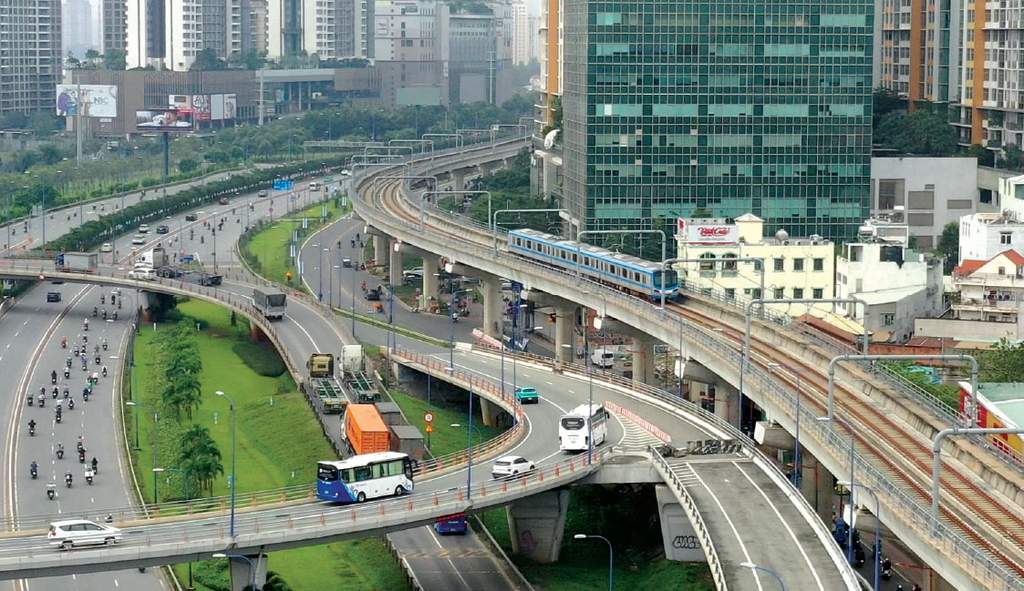
Strategic Financial Solutions for Urban Growth and Mega Infrastructure
To support its high-flying vision of transforming into a modern economic hub, Ho Chi Minh City has set an ambitious annual growth target of 10% to 11%. However, local authorities and policy experts are grappling with a core challenge: securing the astronomical 1.2 quadrillion VND (approximately 47 billion USD) required every year to fund this transformation. As public budgets remain constrained, identifying sustainable, diversified capital inflows has become a matter of strategic urgency.
The massive capital target reflects the scale of the city's necessary upgrades across transportation network expansion, tech-driven smart city initiatives, and sustainable energy projects. According to initial municipal data, public resources can only cover a fraction of this financial burden, leaving a massive funding gap that must be bridged by other financial avenues. Financial planners note that relying solely on traditional state budgets is no longer a viable path forward for the metropolis.
Read Also
Economists point out that attracting private investment and utilizing public-private partnerships (PPPs) will be the cornerstone of solving the city's capital deficit. "To mobilize 1.2 quadrillion VND annually, the city must create an exceptionally transparent regulatory environment that gives foreign and domestic institutional investors high confidence," noted a municipal finance analyst. Industry leaders argue that municipal bonds and enhanced foreign direct investment incentives will also play pivotal roles in the funding strategy.
In addition to private capital, the local government is looking to reform its land-use rights auctions and leverage transit-oriented development (TOD) models to unlock real estate value along major metro lines. This structural shift aims to create an autonomous, self-sustaining financial loop where urban development directly funds subsequent infrastructure expansions. Successful implementation of these innovative funding mechanisms remains essential for the southern metropolis to maintain its position as Vietnam's primary economic engine.