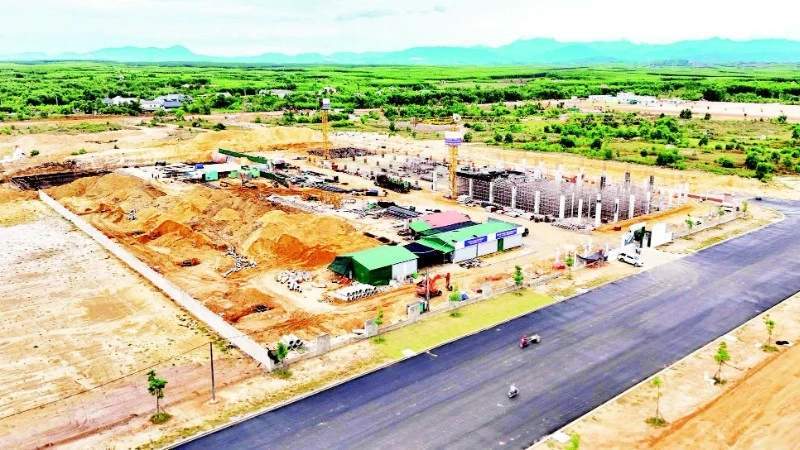
Transforming into a Strategic Green Energy and Multimodal Logistics Hub
Quang Tri Province is executing a comprehensive spatial restructuring to transform itself into a multi-functional economic powerhouse within Vietnam's North Central region. According to Nguyen Duc Tan, Deputy Director of the provincial Investment, Trade, and Tourism Promotion Center, the province has laid out a portfolio of 185 strategic projects for the 2026-2030 period. This targeted master plan aims to leverage private sector funding and Foreign Direct Investment (FDI) to accelerate heavy high-tech, high-value, and ecologically sustainable industries.
The targeted portfolio allocates resources across core strategic sectors, led by logistics with 62 projects, followed by energy with 36 projects, green agriculture with 26 projects, and tourism with 22 projects, alongside 39 infrastructure initiatives. Utilizing its distinct topography and coastal winds, the province is prioritizing large-scale wind and solar infrastructure, highlighted by a multi-trillion-dong offshore wind power facility near the Southeast Quang Tri Economic Zone designed to serve as a modern baseline for heavy maritime industries.
Read Also
Hoang Nam, Permanent Vice Chairman of the Provincial People's Committee, emphasized that Quang Tri's geopolitical location gives it a unique competitive edge, interconnected by a network of four national highways, cross-country railways, expressways, and dual airports. This infrastructure links three vital East-West economic corridors through three international border gates and three major seaports. To solidify this status, the province is calling for investors for the 14-kilometer My Thuy-Dien Sanh railway link, massive integrated distribution centers up to 200 hectares, and extensive bonded warehouses at the La Lay and Lao Bao border checkpoints.
Adhering to a strict policy of economic growth without environmental compromise, the province is also advancing low-impact eco-tourism, led by the 2,000-hectare Bau Sen Lake resort complex, alongside high-tech agricultural zones for organic rice, specialty fruits, and export-grade coffee. To facilitate immediate deployment, local authorities have committed to aggressive administrative reforms, guaranteeing maximum regulatory incentives, expedited land clearances, and the local cultivation of specialized labor pools to meet strict multinational manufacturing standards.